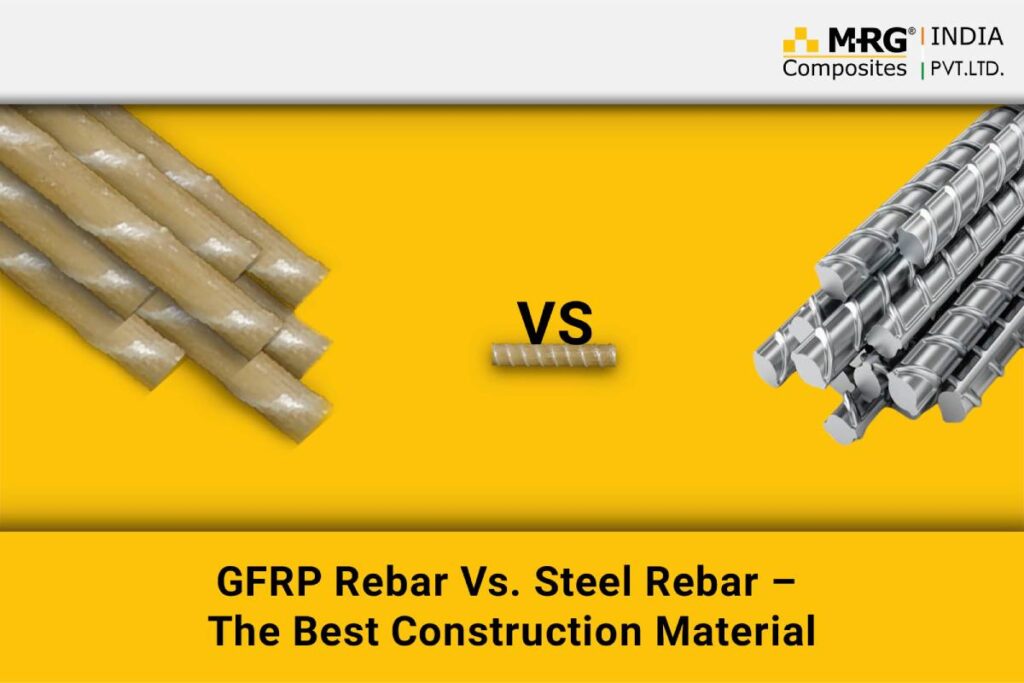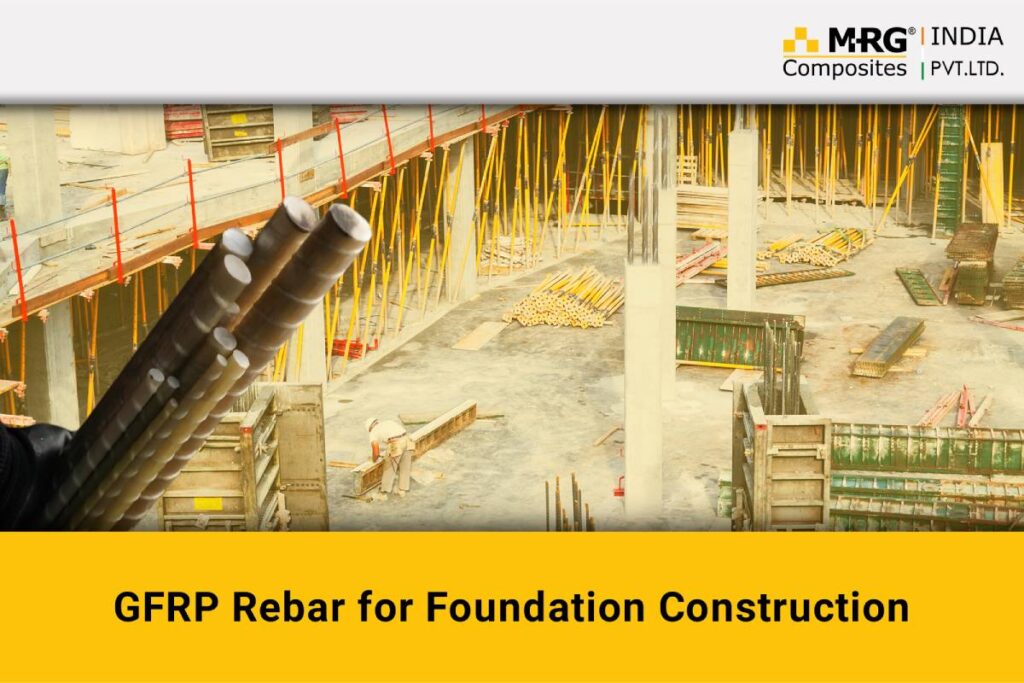
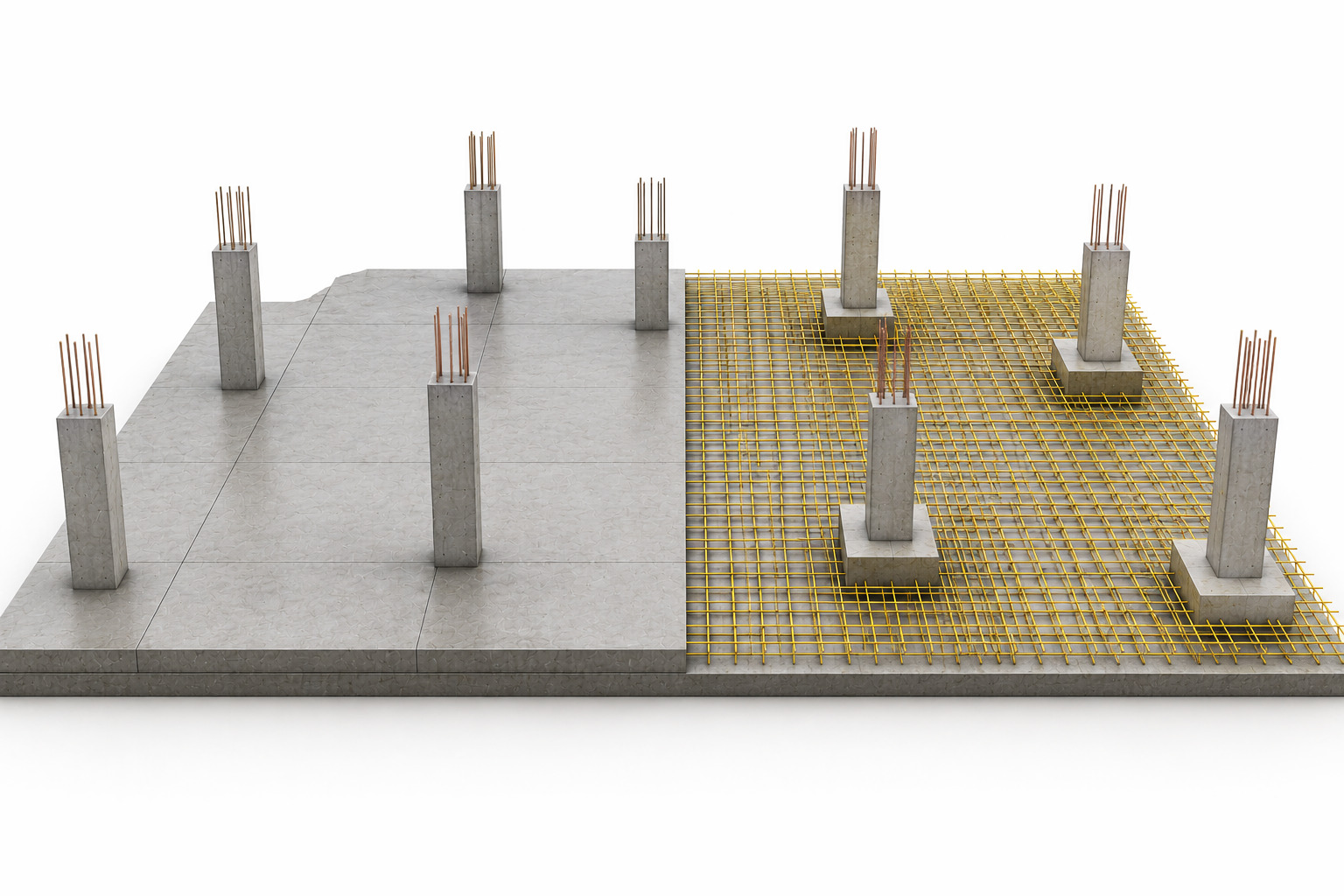
The Problem with Conventional Steel Reinforcement
Steel rebar fails in floor and slab environments for three reasons:
- Corrosion under slabs groundwater and moisture cause steel to rust from within, cracking the concrete above.
- Chemical exposure factory and warehouse environments accelerate steel corrosion, degrading floors faster than designed.
- High maintenance costs failed industrial floors mean costly repairs and expensive operational downtime.
What is GFRP Rebar?
GFRP — Glass Fiber Reinforced Polymer — is a composite rebar. It consists of glass fiber and polymer resin. It is available as straight bars, bent bars, and mesh. MRG Composites is India's first BIS-licensed GFRP rebar manufacturer — a proven, code-compliant material ready to specify.
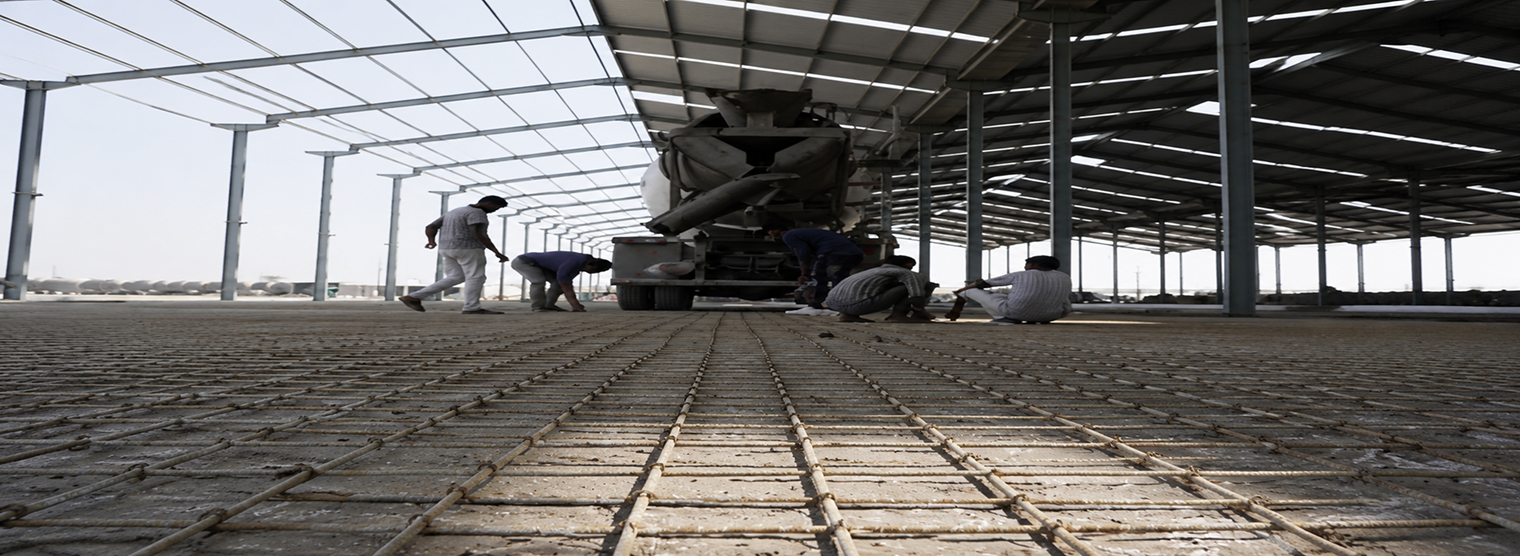
A base slab sits between subgrade and the floor above — 100 mm to 500 mm thick — distributing building loads and blocking groundwater. It demands long-term strength, moisture resistance, and stability.
How GFRP's properties directly address road construction demands
Corrosion resistant
does not rust in contact with water, salts, or soil chemicals.

2× tensile strength
does not rust in contact with water, salts, or soil chemicals.

¼ the weight
faster handling and lower installation labour costs.

Non-conductive
safe for electrically sensitive environments.

Low maintenance
no spalling, no repair cycles over the slab's service life.
Industrial floors in factories, warehouses, and manufacturing plants endure heavy machinery, forklift traffic, chemical spills, and thermal cycling daily. Steel-reinforced floors crack, corrode, and need frequent repair.
How GFRP's properties directly address highway construction demands
Chemical resistance
inert to acids, alkalis, oils, and industrial cleaning agents.

High load capacity
2× the tensile strength of steel handles heavy machinery and constant traffic.

Thermal stability
no expansion and contraction cycle, reducing thermal cracking.

Zero maintenance
no rust, no spalling, no corrective repairs needed.
GFRP Bars vs. Steel Rebar
| Property | Steel Rebar | GFRP Rebar |
|---|---|---|
| resistance | Corrodes with moisture & chemicals | Fully corrosion-resistant |
| Tensile strength | Baseline | 2× higher |
| Weight | Heavy | ¼ of steel |
| Conductivity | Conductive | Non-conductive |
| Lifespan (harsh environments) | 15–25 years | 50+ years |
| Maintenance cost | High | Near zero |
| Upfront cost | Lower | Higher — lower lifecycle cost |
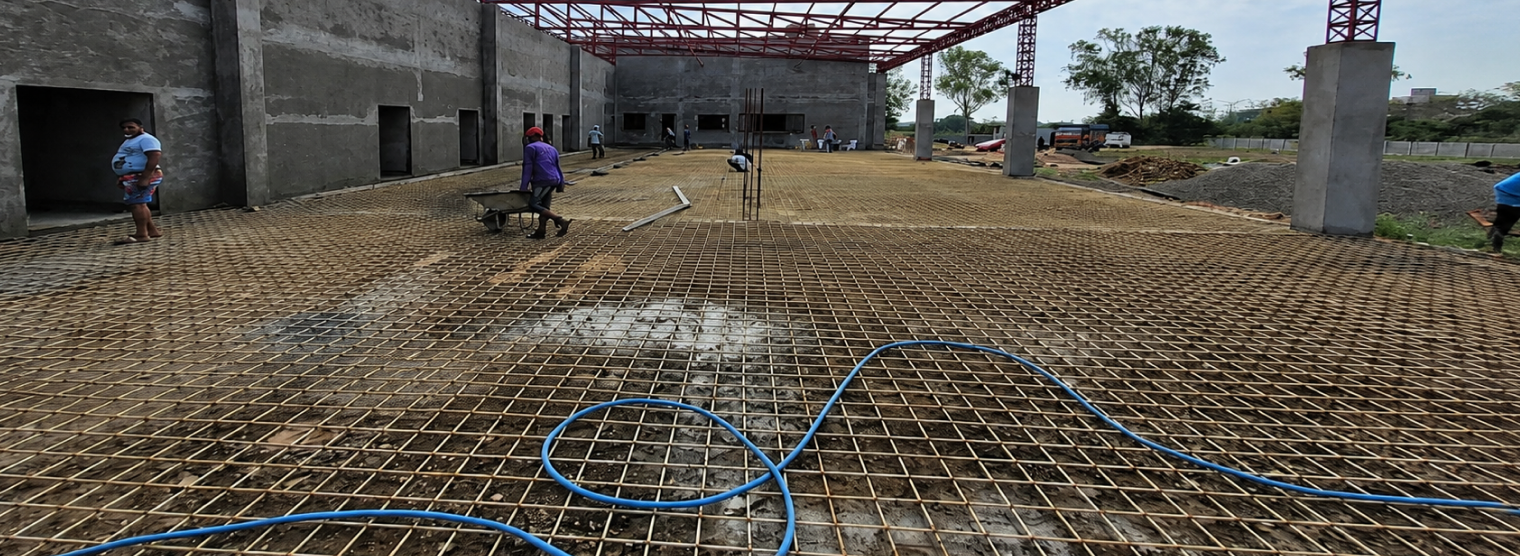
Certifications & Standards
IS : 18256 : 2023 Certificate
Our GFRP Rebars are manufactured in compliance with IS 18256:2023, ensuring high standards of strength, durability, and performance for use in structural and infrastructure applications.

ISO 9001:2015 Certificate
We are certified under ISO 9001:2015, reflecting our commitment to consistent quality, efficient processes, and continuous improvement across our manufacturing and customer service operations.
Specifying GFRP rebar for your next project?
Get A QuoteWhat Our Clients Say
99.9% Customer Satisfaction
based on 750+ reviews and 6,154 Completed Projects.

Working with MRG Composites Rebar was a game-changer for us. Their expertise and dedication helped us achieve our goals faster than we ever imagined

MRG Composites Rebar truly understands our needs. Their personalized approach and attention to detail made all the difference in our project's success.

We've been consistently impressed with MRG Composites Rebar's innovative solutions and proactive approach. They've become a trusted partner in our growth journey.

MRG Composites Rebar has transformed our projects with its durable and corrosion-resistant quality. Their timely delivery and support are excellent.

MRG’s GFRP rebar is cost-effective and durable, even in tough UAE conditions. Their professionalism is impressive.

Working with MRG was easy and efficient. Their GFRP rebar is strong, durable, and a great alternative to steel.

MRG Composites' GFRP rebar made a remarkable difference in our project. Lightweight yet strong, it sped up installation effortlessly.
Have Questions?We've Got Answers

Get In Touch
Get a quote for your road or highway construction project. Share your project location, slab dimensions, and rebar diameter requirements — we will respond with a GFRP rebar price and technical data sheet for your engineering team.