The Problem with Steel Rebar in Bridge Construction
Steel reinforcement deteriorates progressively in bridge environments — and the conditions that accelerate it are unavoidable:
- Salt-laden environments: coastal bridges and structures over saline waterways. It expose expose steel to chloride ion penetration, and triggers corrision for rebar. Chlorides bypass concrete cover over time and initiate rust at the bar surface
- Freeze-thaw cycling: in cold-climate and high-altitude bridge construction, repeated freezing and thawing expands water inside concrete micro-cracks, accelerating delamination around corroding steel
- Carbonation: over time, CO₂ reduces concrete alkalinity, removing the passive layer that normally protects embedded steel and initiating corrosion even without chloride exposure
- Long inspection cycles: bridges are inspected every 5–10 years under standard PWD and infrastructure protocols. Corrosion damage accumulates silently between inspections, often reaching critical levels before it is detected
- Inaccessible repair zones: bridge decks, piers, and substructures are difficult and expensive to remediate. Repair requires lane closures, scaffolding, concrete breaking, and re-casting — at significant cost and public disruption
What Is GFRP Rebar?
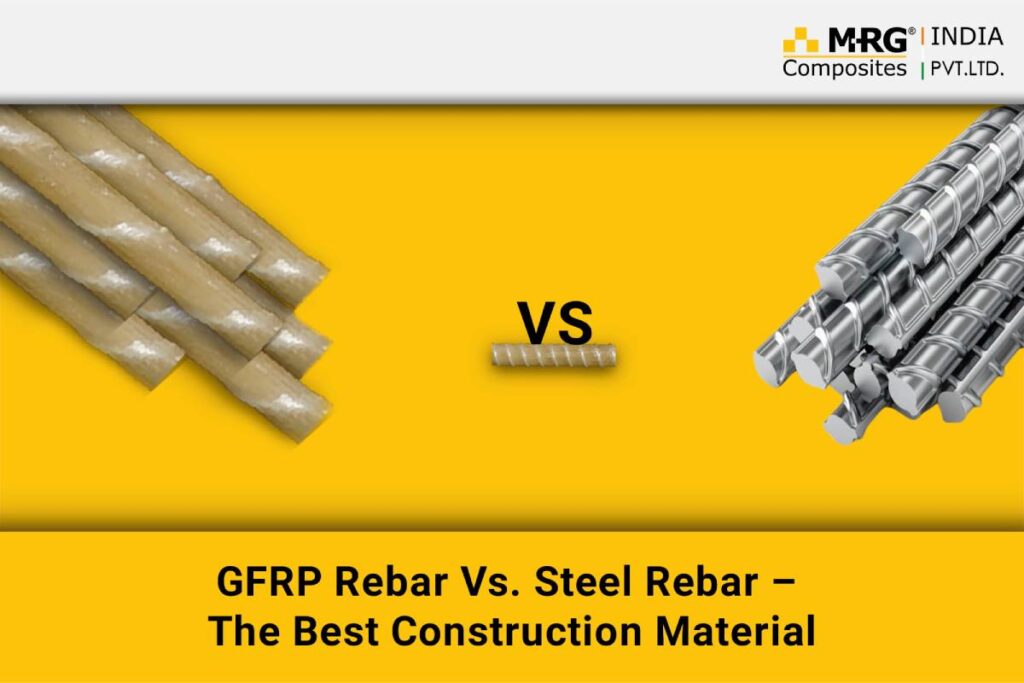
GFRP — glass fiber reinforced polymer is a modern construction material. It consists of high strength Glass fibers and polymer resin matrix. GFRP Bars are stronger, lighter, corrosion resistant and cost-effective bridge construction material.
MRG Composites is India's first BIS license holder for GFRP bars and an ISO 9001:2015 certified manufacturer — a qualified supply partner for government, PWD, and large infrastructure projects.
Why GFRP is Specifically Suited for Bridge Construction
Bridges demand a construction material that holds structural performance across a 50–100 year design life, in environments steel cannot reliably survive.
Chloride impermeability
GFRP bars contain no iron. Chloride ion ingress — the mechanism that destroys steel in coastal and marine bridge construction — has no effect on GFRP

Reduced cover depth
without corrosion risk, minimum concrete cover requirements are lower, enabling lighter bridge decks and more efficient cross-sections

High tensile strength
at approximately 1000 MPa, GFRP bars carry approximately 2× the tensile load of equivalent steel rebar, handling dynamic traffic loads and structural demands

Lightweight
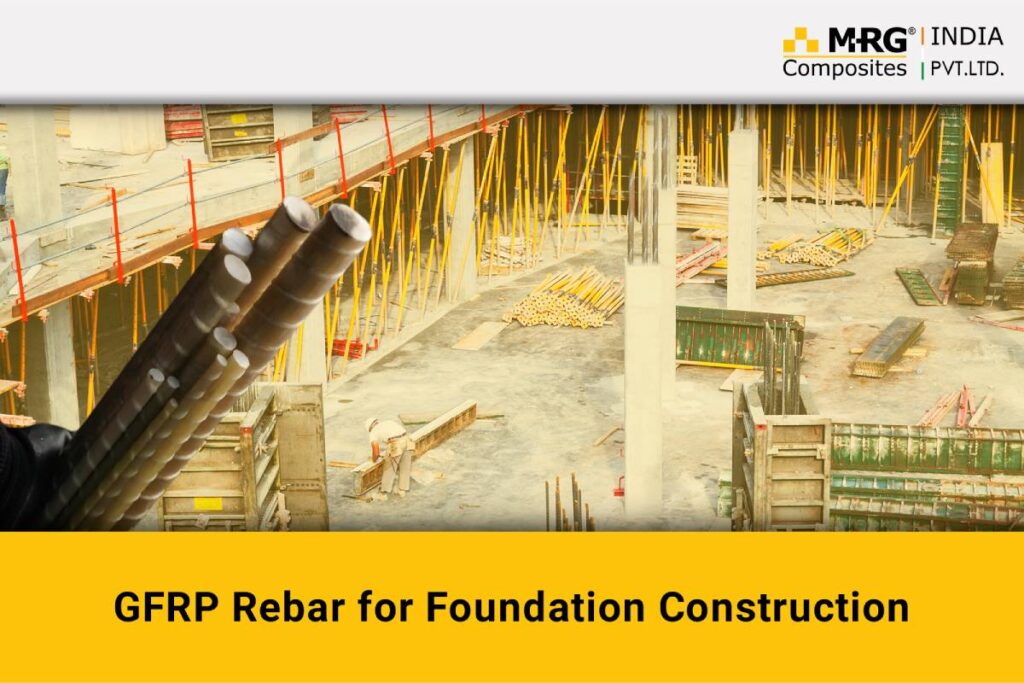
at ¼ the weight of steel, GFRP bars reduce dead load on bridge structures, a meaningful advantage in long-span bridge construction and deck replacement
Bridge Applications Where GFRP Performs
How GFRP's properties directly address highway construction demands
Corrosion resistant
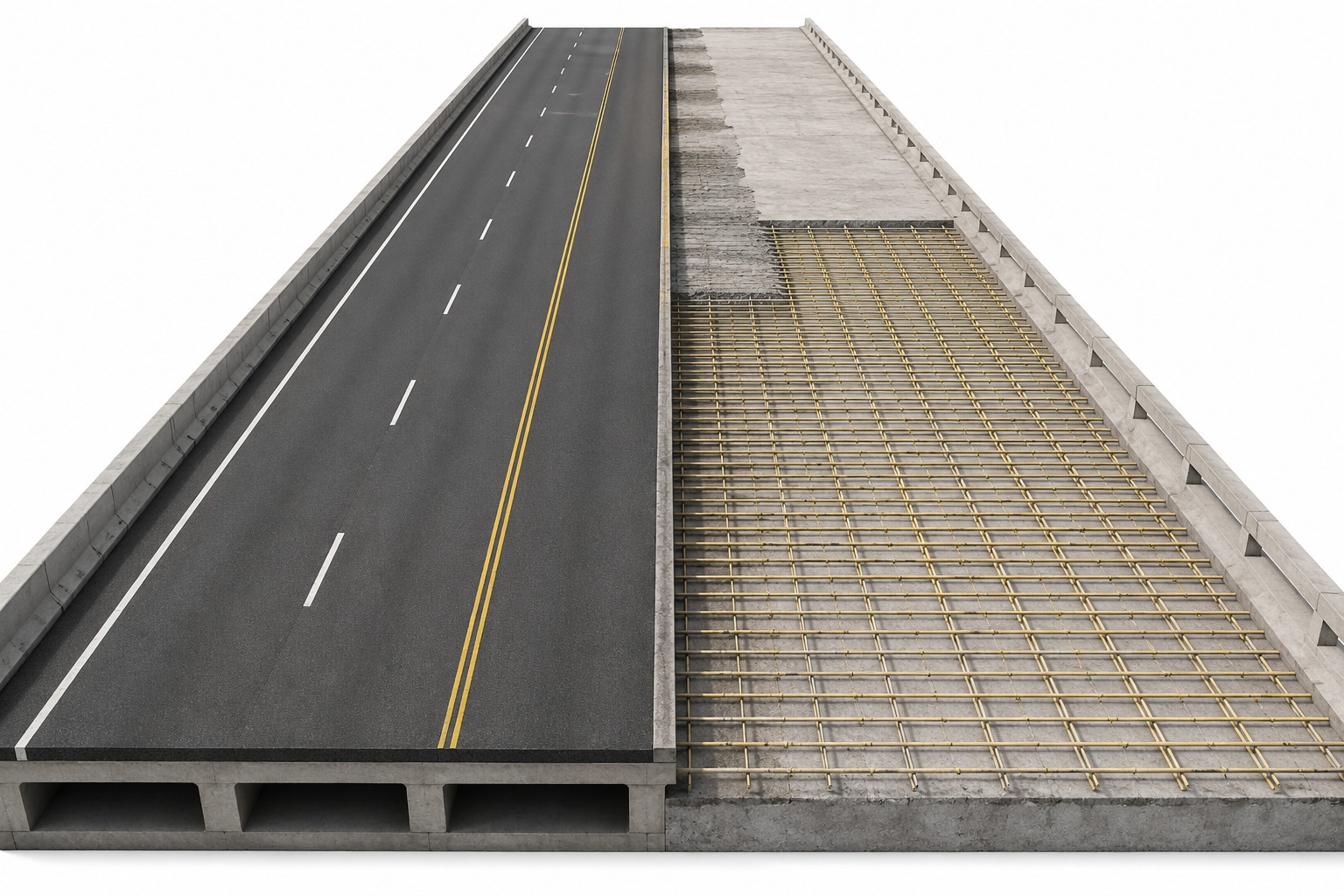
On bridge decks, it handles constant rain, road salt, and changing temperatures without causing cracks or corrosion.

In piers and substructures, it performs well even when surrounded by wet soil or standing water.

For coastal and marine bridges, GFRP is especially useful because salt air and seawater can destroy steel over time.

On river and canal crossings, it gives long-term protection in areas that remain damp throughout the year.

For highway overpasses, it is not affected by de-icing salts, which are one of the main reasons steel reinforcement fails early.
GFRP Vs. Steel Rebar
| Property | Steel Rebar | GFRP Rebar |
|---|---|---|
| Chloride resistance | Corrodes under chloride exposure | Full — no corrosion mechanism |
| Freeze-thaw performance | Rust expansion cracks concrete | Unaffected |
| Tensile strength | ~500 MPa | ~1000 MPa |
| Weight | ~7.8 g/cm³ | ~2.1 g/cm³ |
| Minimum cover required | Higher | Lower |
| Design life (aggressive env.) | 20–40 years | 75–100 years |
| Lifecycle maintenance cost | High | Low |
Our Certifications & Quality Standards

IS : 18256 : 2023 Certificate
Our GFRP Rebars are manufactured in compliance with IS 18256:2023, ensuring high standards of strength, durability, and performance for use in structural and infrastructure applications.

ISO 9001:2015
certified quality management across production

Make in India
Specifying GFRP rebar for your next project?
Get A QuoteWhat Our Clients Say
99.9% Customer Satisfaction
based on 750+ reviews and 6,154 Completed Projects.

Working with MRG Composites Rebar was a game-changer for us. Their expertise and dedication helped us achieve our goals faster than we ever imagined

MRG Composites Rebar truly understands our needs. Their personalized approach and attention to detail made all the difference in our project's success.

We've been consistently impressed with MRG Composites Rebar's innovative solutions and proactive approach. They've become a trusted partner in our growth journey.

MRG Composites Rebar has transformed our projects with its durable and corrosion-resistant quality. Their timely delivery and support are excellent.

MRG’s GFRP rebar is cost-effective and durable, even in tough UAE conditions. Their professionalism is impressive.

Working with MRG was easy and efficient. Their GFRP rebar is strong, durable, and a great alternative to steel.

MRG Composites' GFRP rebar made a remarkable difference in our project. Lightweight yet strong, it sped up installation effortlessly.
Have Questions?We've Got Answers

Get In Touch
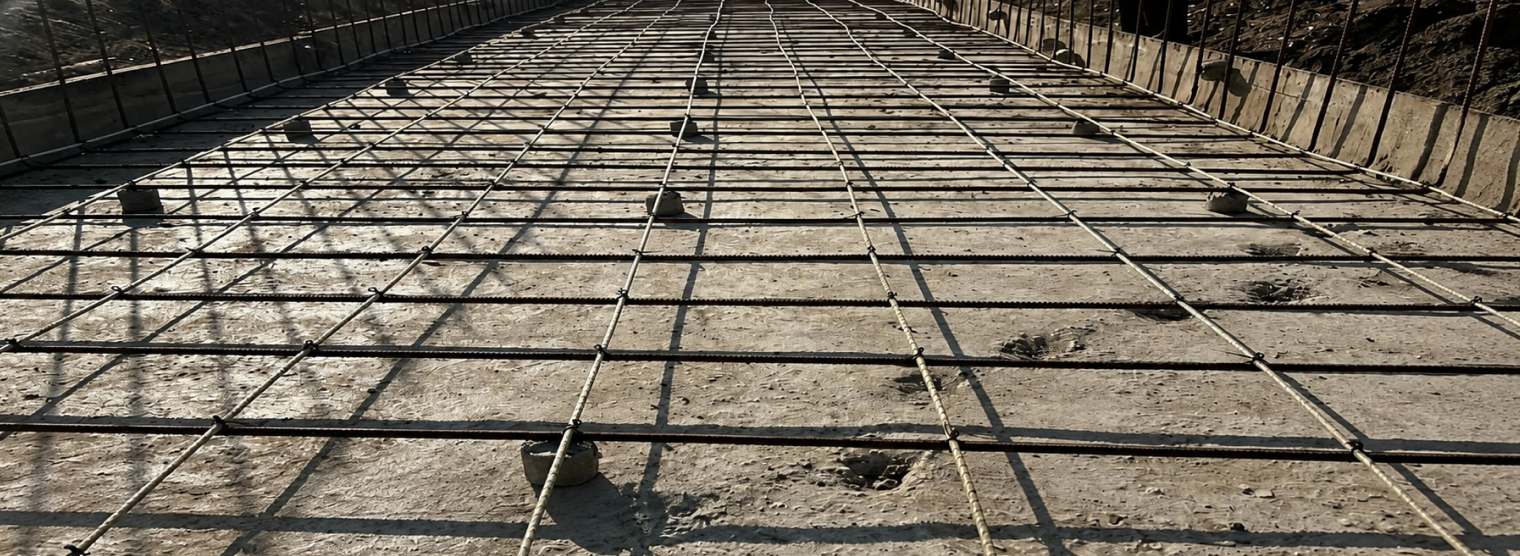
Get a quote for your road or highway construction project. Share your project location, slab dimensions, and rebar diameter requirements — we will respond with a GFRP rebar price and technical data sheet for your engineering team.
We'd Love to Hear From You
We’d love to hear from you